
Shmuel Eagle
Lead Tax Instructor
Co-founder of BlueLink with 15+ years in tax preparation and office management.
Learn to prepare individual 1040 tax returns the professional way — filing status, dependents, credits, and due diligence — using the real-world workflows BlueLink tax offices rely on.
Shmuel Eagle
Instructor
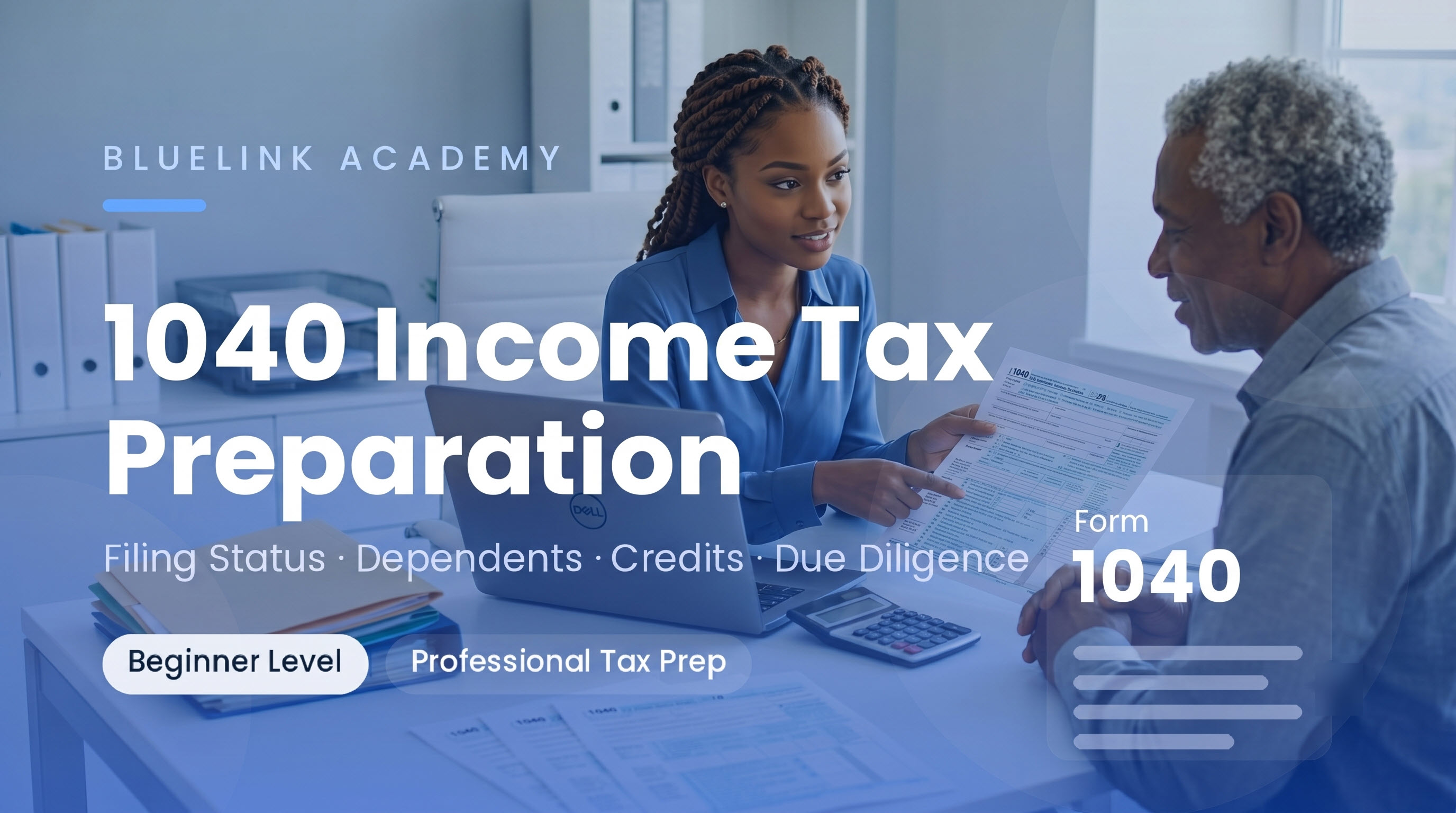
Master the foundation of professional tax preparation by learning how to determine filing statuses, evaluate dependency eligibility, and apply IRS rules with confidence.
Every accurate tax return begins with a few critical decisions. Before income is entered, deductions are calculated, or credits are applied, a preparer must first determine the taxpayer's filing status and correctly identify who qualifies as a dependent.
These decisions affect tax rates, standard deductions, eligibility for credits, and many other areas throughout the return. A mistake at the beginning can impact the entire preparation process, making these topics some of the most important concepts every tax preparer must understand.
This course focuses on those foundational areas of Form 1040 preparation and teaches students how professional preparers evaluate taxpayer situations using IRS rules and structured interview techniques.
Students learn how to determine the correct filing status by analyzing taxpayer circumstances and applying IRS requirements. The course examines Single, Head of Household, Married Filing Jointly, Married Filing Separately, and Qualifying Surviving Spouse filing statuses while highlighting situations that commonly create confusion and lead to filing errors.
Special attention is given to Head of Household eligibility, considered unmarried rules, household support requirements, and the documentation habits professional preparers use when making filing status determinations.
A major portion of the training focuses on dependency determination. Students learn how to evaluate Qualifying Children and Qualifying Relatives using IRS relationship tests, age requirements, residency requirements, support tests, and income limitations.
Rather than memorizing rules, students learn how to analyze facts and apply those rules in real-world taxpayer situations. Practical examples demonstrate how dependency decisions affect filing status, tax benefits, and overall return accuracy.
The course also addresses more complex situations frequently encountered during tax season, including divorced or separated parents, custodial and noncustodial parent claims, IRS tie-breaker rules, and multiple support agreements.
Students become familiar with important supporting documentation and forms used in dependency-related situations while learning how experienced preparers resolve competing claims and verify eligibility.
Throughout the training, emphasis is placed on professional taxpayer interviews, due diligence, documentation, and communication skills. Students learn how to ask effective questions, identify missing information, verify facts, and support filing decisions with proper documentation.
The course also highlights common preparer mistakes, areas of increased IRS scrutiny, and professional habits that contribute to accurate and defensible tax returns.
Professional tax preparation is not about guessing.
It is about asking the right questions, gathering the right information, applying IRS rules correctly, and documenting every decision.
This course provides the foundation needed to approach filing status determination, dependency evaluation, and taxpayer interviews with greater confidence, accuracy, and professionalism.
Lead Tax Instructor
Co-founder of BlueLink with 15+ years in tax preparation and office management.
Reviews are written by students who completed all lessons and the final exam.
0.0
☆☆☆☆☆
0 reviews
No reviews yet.
Discussion for enrolled students only. Comments are reviewed by our team before they appear publicly. You must be enrolled in this class to post.
Sign in and enroll to participate in class discussions.
Discussion
No comments yet
Be the first to start the discussion once comments are approved.